
Mumbai: BMC Scraps Flyover Plan for Flood-Prone Andheri Subway; Here’s Why
By Lokmat Times Desk | Updated: May 13, 2026 12:32 IST2026-05-13T12:31:05+5:302026-05-13T12:32:16+5:30



The Brihanmumbai Municipal Corporation (BMC) has dropped its proposal to build a flyover at the Andheri subway, ending a ...
Mumbai: BMC Scraps Flyover Plan for Flood-Prone Andheri Subway; Here’s Why
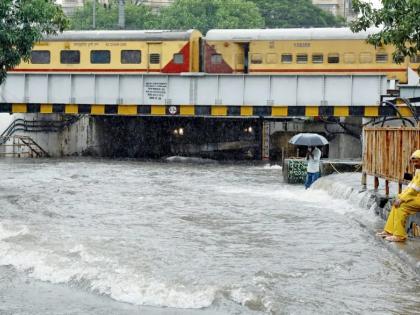
The Brihanmumbai Municipal Corporation (BMC) has dropped its proposal to build a flyover at the Andheri subway, ending a plan that was being considered as a permanent remedy for severe monsoon flooding in the area. Earlier this year, the civic authority had appointed a consultant to study whether a flyover could help divert vehicles away from the subway, which frequently gets submerged during heavy rainfall and is often shut to traffic. The subway has long remained a major concern for commuters during Mumbai’s monsoon season, with repeated closures causing widespread inconvenience and traffic disruptions across nearby roads and important transport routes in the western suburbs of the city.
The Andheri subway experiences flooding mainly because it is situated in a low-lying catchment zone connected to the Mogra nullah. During heavy rainfall, water rapidly flows towards the subway due to the natural slope and gradient of the surrounding area. Reports over the years have highlighted how a bottleneck near the Mogra nullah, close to the subway, slows the drainage process and results in severe water accumulation. Every monsoon, rising water levels force authorities to temporarily close the route for safety reasons. The recurring issue has made the subway one of Mumbai’s most flood-prone traffic points, affecting thousands of daily commuters and motorists.
Also Read: Mumbai Woman Quits Job After Boss Allegedly Publicly Humiliates Her Over Overtime Pay (Watch Video)
According to civic officials, the proposed flyover project was cancelled after experts found it technically unviable because of severe space limitations around the site. Authorities stated that the Western Railway line passing above the subway posed a major challenge, as any flyover would have needed to be constructed at a height exceeding six metres. Officials also noted that the available bridge length was insufficient to create a gradual and safe slope for vehicles. Due to these engineering constraints, the BMC concluded that the flyover could not be practically executed and decided to abandon the proposal despite the long-standing flooding concerns in the area.
The Andheri subway serves as an important east-west connector for Mumbai’s commuters and plays a significant role in reducing travel time between the two sides of the suburb. Whenever the subway gets flooded and is shut, traffic is redirected through alternative routes such as the Gokhale Bridge and the Balasaheb Thackeray Flyover. These diversions increase travel distances by around 1.5 km to 3 km and lead to major traffic congestion on SV Road and the Western Express Highway. To tackle the flooding problem without constructing a flyover, the BMC is now considering other solutions, including installing sump pits with dewatering pumps and building an underground water storage tank.
Open in app