
Mumbai Watermelon Deaths Case: FDA Reveals Key Findings About Half-Eaten Watermelon Consumed by Pydhonie Family
By Lokmat Times Desk | Updated: May 2, 2026 11:22 IST2026-05-02T11:22:16+5:302026-05-02T11:22:31+5:30



A family from South Mumbai’s Paydhuni area died under suspicious circumstances last week, prompting an investigation into the cause ...
Mumbai Watermelon Deaths Case: FDA Reveals Key Findings About Half-Eaten Watermelon Consumed by Pydhonie Family
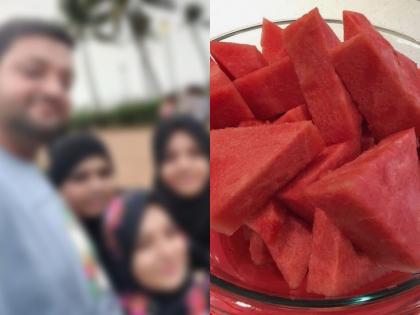
A family from South Mumbai’s Paydhuni area died under suspicious circumstances last week, prompting an investigation into the cause of their deaths. The parents and their two young daughters had reportedly eaten watermelon at around 1.30 am on April 25. By morning, all four began suffering from vomiting and diarrhoea and later died during treatment.
Following the incident, many suspected that the family may have been poisoned by the watermelon they had eaten at night after get together dinner with relatives. Police subsequently collected samples of the half-eaten watermelon from the Dokadia family’s residence in Pydhonie and sent them to the Food and Drug Administration (FDA) for testing. The report has now been released.
FDA Report on Watermelon
According to the FDA report accessed by ABP Majha, no adulteration was found in the watermelon recovered from the family’s house. FDA officials had collected 11 samples from the residence of Dokadia family and had sent them for laboratory examination. These included biryani, watermelon, water from the kitchen and refrigerator, raw and cooked rice, raw and cooked chicken, dates and spices.
The FDA report stated that no artificial colours or chemicals had been used in the watermelon to enhance its colour, sweetness or size. As a result, the possibility that the Dokadia family died due to adulteration in the watermelon has been ruled out, according to the ABP Majha report.
FDA on Food Samples
The report also stated that no adulteration was found in any of the other food samples collected from the house. Attention has now shifted to the forensic examination and bacterial test reports to determine the exact cause of death. With no adulteration found in the watermelon, the mystery surrounding the deaths has deepened further, according to ABP Majha.
According to earlier forensic examination, which was conducted on the bodies of the parents and the young girl from the Dokadia family, and the preliminary findings suggest brain, heart and intestines of the deceased had turned green.
Experts said this condition is different from ordinary food poisoning, leading doctors to suspect possible poisoning. Medical experts noted that when symptoms appear simultaneously in multiple organs, it may indicate that a toxic substance had spread throughout the body.
Open in app