
Mission Drishti a proof of India’s space reforms: Industry
By IANS | Updated: May 3, 2026 17:15 IST2026-05-03T17:13:35+5:302026-05-03T17:15:12+5:30



New Delhi, May 3 The successful launch of Mission Drishti serves as a definitive proof-of-concept for India’s private ...
Mission Drishti a proof of India’s space reforms: Industry
New Delhi, May 3 The successful launch of Mission Drishti serves as a definitive proof-of-concept for India’s private space sector reforms and signals a transition from small-scale testing to sovereign, all-weather surveillance capabilities, the Indian Space Association said on Sunday.
Lt. Gen. AK Bhatt (Retd.), Director General of the industry body, said the milestone reflects a pivotal shift in India’s approach to Earth observation and underlines the growing maturity of the private space ecosystem.
He noted that the mission demonstrates how private players are now capable of delivering critical technologies with applications in national security and disaster response.
“The successful launch of GalaxEye’s first satellite under Mission Drishti, also the largest ever built by a private Indian company, marks a pivotal shift in India’s approach to Earth observation,” he said.
“It serves as a definitive proof-of-concept for India’s private space sector reforms and signals a transition from small-scale testing to sovereign, all-weather surveillance capabilities critical for national security and disaster response,” he added.
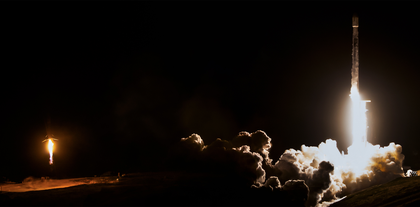
The comments came after Bengaluru-based startup GalaxEye successfully launched its first commercial satellite, Mission Drishti, described as the world’s first OptoSAR satellite.
The launch marks a significant advancement in Earth observation technologies and reinforces India’s rising capabilities in the global space sector.
Weighing around 190 kilograms, Mission Drishti is the largest privately developed Earth observation satellite in India.
It is the first satellite globally to combine Electro-Optical (EO) and Synthetic Aperture Radar (SAR) sensors into a single platform, enabling imaging in all weather conditions, both day and night.
Highlighting the technological breakthrough, Bhatt said that with the commercialisation of OptoSAR, GalaxEye has achieved what only a handful of global players have managed -- seamlessly integrating optical and radar capabilities for persistent, all-weather intelligence.
“What stands out is not just the technology, but its broader impact on how downstream applications will increasingly define value in the space economy, particularly in Earth observation where timely, decision-grade insights are critical,” he mentioned.
This integrated system addresses the limitations of conventional optical satellites, which are affected by cloud cover and darkness, while also leveraging the strengths of radar imaging.
Mission Drishti is designed as a dual-use satellite, supporting a wide range of applications including defence, agriculture, disaster management, maritime monitoring and infrastructure planning.
The satellite is expected to deliver high-resolution imagery and consistent data, even in challenging environmental conditions.
Disclaimer: This post has been auto-published from an agency feed without any modifications to the text and has not been reviewed by an editor
Open in app