
Nitish Kumar Resigns as MLC After Rajya Sabha Win, Sparks Leadership Speculation in Bihar
By Lokmat Times Desk | Updated: March 30, 2026 14:52 IST2026-03-30T14:52:36+5:302026-03-30T14:52:36+5:30



Bihar Chief Minister Nitish Kumar has formally resigned from his position as a Member of the Legislative Council (MLC), ...
Nitish Kumar Resigns as MLC After Rajya Sabha Win, Sparks Leadership Speculation in Bihar
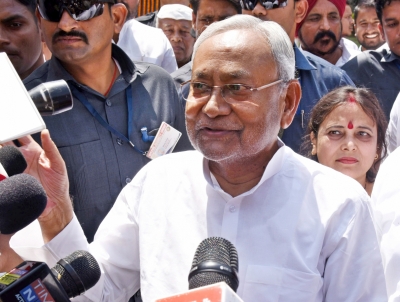
Bihar Chief Minister Nitish Kumar has formally resigned from his position as a Member of the Legislative Council (MLC), a move confirmed by an official notification from the Bihar Legislative Council Secretariat. The resignation, submitted through JD(U) leader Sanjay Gandhi, follows his recent election to the Rajya Sabha on March 16, where he secured support from 44 MLAs. This step adheres to constitutional requirements mandating that a person vacate one legislative seat within 14 days of being elected to another. Kumar’s resignation marks a significant political shift, signaling his upcoming role in the Upper House of Parliament.
Chief Minister Nitish Kumar’s resignation from the MLC post has been accepted. The Bihar Legislative Council Secretariat has issued an official notification pic.twitter.com/tnNZu6hEXn
— IANS (@ians_india) March 30, 2026
Also Read: Rajasthan: Russian Photographer Faces Backlash for Pink Elephant Shoot in Jaipur
Transitioning towards a parliamentary role, Nitish Kumar, who has held the Chief Minister’s office in Bihar for a record ten terms, is expected to take oath as a Rajya Sabha member in early April. While he continues to serve as Chief Minister for the time being, this move has fueled speculation about a potential leadership change in the state. Political observers suggest that his focus may gradually shift to national affairs, indicating a possible recalibration of power dynamics within the state government in the coming months.
Kumar’s resignation has also reignited discussions around succession within the JD(U)-led administration. Deputy Chief Minister Samrat Choudhary is seen as a prominent contender for a larger leadership role, while attention has also turned to Kumar’s son, Nishant Kumar, whose recent entry into politics has sparked debates about a generational transition within the party. Nitish Kumar’s political journey spans decades, from his early years as an MLA in the 1980s to serving as Union Minister under the Atal Bihari Vajpayee government. Since becoming Chief Minister in 2005, he has remained a central figure in Bihar, adeptly navigating alliances and maintaining political influence.
Open in app