
Telangana: Municipal Officials Use Garbage Trucks to Block Petrol Pump to Shame Tax Defaulter
By Lokmat Times Desk | Updated: March 31, 2026 11:18 IST2026-03-31T11:17:50+5:302026-03-31T11:18:30+5:30



In an unusual move to recover long-pending civic dues, municipal officials in Tandur town of Telangana’s Vikarabad district carried ...
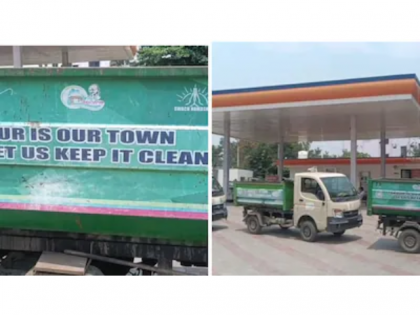
Telangana: Municipal Officials Use Garbage Trucks to Block Petrol Pump to Shame Tax Defaulter
In an unusual move to recover long-pending civic dues, municipal officials in Tandur town of Telangana’s Vikarabad district carried out a striking protest. Authorities surrounded a petrol pump with tractors and municipal vehicles filled with garbage after it allegedly failed to clear property tax dues of nearly Rs 82,000 for over five years. The action was designed to draw public attention and pressure the establishment into making payment. The protest quickly became a talking point locally, highlighting the administration’s growing frustration with repeated non-compliance and its willingness to adopt unconventional measures to enforce tax recovery.
Civic authorities stated that several reminders and official notices had been issued to the petrol station over the years, but no response was received. This prompted officials to take a more visible and assertive approach by staging the blockade. They further cautioned that such public demonstrations could be extended to other defaulters, including residential and commercial properties, if dues remain unpaid. The incident in Tandur is part of a wider initiative across Telangana aimed at improving tax discipline, particularly in urban areas where municipal revenues are critical for infrastructure development and public service delivery.
Across the state, municipal corporations are grappling with significant unpaid property taxes. The Greater Hyderabad Municipal Corporation, along with Cyberabad and Malkajgiri civic bodies, is facing mounting arrears that have crossed Rs 3,000 crore. Officials estimate that the figure could climb to nearly Rs 5,000 crore once the ongoing One-Time Settlement scheme concludes at the end of March. For the financial year 2025–26, Hyderabad’s total tax demand, including both fresh dues and pending arrears, stands at approximately Rs 6,387 crore, of which only around Rs 2,200 crore has been recovered so far.
Within the jurisdiction of the Greater Hyderabad Municipal Corporation alone, outstanding dues are estimated at about Rs 1,400 crore. These arrears are linked to nearly 3.5 lakh properties, with a significant portion—around 30 percent—coming from commercial establishments. As the financial year nears its conclusion, authorities have stepped up enforcement measures. More than 100 large commercial properties have reportedly been sealed for failing to clear their dues, signaling a stricter approach by civic bodies determined to improve compliance and recover substantial unpaid revenues.
Several prominent establishments, including upscale hotels and well-known educational institutions, have also been found among major defaulters, with liabilities running into crores. Officials noted that many of these entities responded quickly once enforcement action was initiated, clearing their dues to avoid further penalties. This has reinforced the effectiveness of stricter recovery measures. At the same time, authorities are promoting a limited-period One-Time Settlement scheme, which offers a waiver on interest if taxpayers clear the principal amount within the deadline, encouraging voluntary compliance.
The state government has directed municipal and district administrations to intensify their efforts in identifying and acting against tax defaulters. Alongside enforcement drives, awareness campaigns are being conducted to motivate citizens and businesses to settle outstanding dues promptly. Officials emphasize that improving tax collection is essential not only for financial stability but also for ensuring uninterrupted delivery of civic services. The broader objective of this initiative is to strengthen urban governance, enhance infrastructure funding, and create a more accountable system where taxpayers contribute fairly toward the development of their cities.
Open in app