
Who Is Harish Rana? Man in Coma for 12 Years Gets Right to Die After Supreme Court Order
By Lokmat Times Desk | Updated: March 11, 2026 13:40 IST2026-03-11T13:39:37+5:302026-03-11T13:40:33+5:30



The Supreme Court of India on Wednesday, March 11, allowed a plea for passive euthanasia for Harish Rana, a ...
Who Is Harish Rana? Man in Coma for 12 Years Gets Right to Die After Supreme Court Order
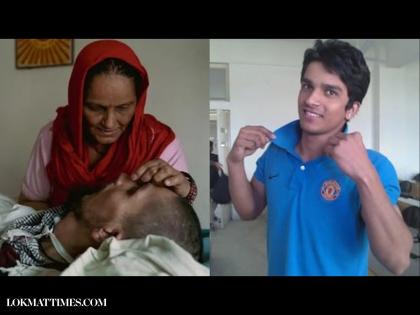
The Supreme Court of India on Wednesday, March 11, allowed a plea for passive euthanasia for Harish Rana, a 31-year-old man who has been in a coma for the past 12 years following a serious accident. The court permitted the withdrawal of life support after considering a request made by his parents. A Bench of Justices J.B. Pardiwala and K.V. Viswanathan allowed the petition filed by Rana’s family, noting that his medical condition had not improved despite years of treatment and care.
The court said a medical board may use its clinical judgement to decide on the withdrawal of life support, in line with the guidelines laid down in the 2018 Supreme Court judgment in Common Cause vs Union of India, which recognised passive euthanasia and living wills. The Bench also urged the Union government to consider framing a law on passive euthanasia. Currently, such cases are permitted only after the Supreme Court examines the opinions of medical boards regarding the patient’s condition.
Who Is Harish Rana?
Harish Rana was a BTech student in Chandigarh when he suffered a severe accident in August 2013. He reportedly fell from the fourth floor of his paying guest accommodation, resulting in a serious traumatic brain injury. The accident left him with complete quadriplegic disability, and he has remained bedridden since then.
Also Read | Mumbai: Falooda Vendor Stabbed to Death in Mankhurd’s Mandala Area; CCTV Captures Brutal Attack.
According to court records, Rana shows sleep-wake cycles but has no meaningful interaction with his surroundings. Doctors have found no sign of recovery over the years. He has been receiving clinically assisted nutrition through a percutaneous endoscopic gastrostomy (PEG) tube and requires full-time care for all daily activities.
Legal Proceedings
Earlier, Rana’s family had approached the Delhi High Court, requesting the formation of a medical board to examine his condition and consider passive euthanasia. However, the High Court declined the plea, noting that Rana was not on mechanical life support and was able to sustain himself without external ventilation, which meant the case did not fall within the scope of passive euthanasia at that stage.
The matter was later brought before the Supreme Court, which allowed the plea after reviewing the medical reports and the patient’s long-term condition.
Open in app