
Pimpri-Chinchwad Civic Body Approves ₹9,322 Crore Budget; Major Push for Water, Roads, and Urban Projects
By Lokmat Times Desk | Updated: March 24, 2026 18:01 IST2026-03-24T18:01:34+5:302026-03-24T18:01:34+5:30



The Pimpri-Chinchwad Municipal Corporation (PCMC) has proposed an increase of ₹414.22 crore in its ₹9,322.17 crore budget for the ...
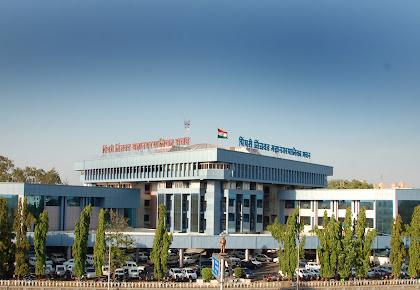
Pimpri-Chinchwad Civic Body Approves ₹9,322 Crore Budget; Major Push for Water, Roads, and Urban Projects
The Pimpri-Chinchwad Municipal Corporation (PCMC) has proposed an increase of ₹414.22 crore in its ₹9,322.17 crore budget for the financial year 2026–27, placing it before the general body for final approval through the standing committee. Of the total allocation, ₹1,300 crore has been earmarked for ongoing projects, while ₹200 crore has been set aside for new initiatives. Standing Committee Chairman Abhishek Barne presented the budget to Mayor Ravi Landge, who approved it during the general body meeting held on Tuesday (March 24). Commissioner Dr. Vijay Suryavanshi and City Secretary Mukesh Kolap were also present during the session.
To boost revenue generation, the civic body expects a significant increase in income, particularly from the building permission department, which is projected to contribute an additional ₹258 crore. With the resumption of government measurement and ‘No Objection Certificate’ processes, both residential and commercial construction activities have gained momentum. The administration also anticipates higher earnings of ₹50 crore from property tax, ₹34 crore from hoarding permissions, and ₹20 crore from water charges, along with incremental revenue from other sources, strengthening the corporation’s overall financial outlook.
The budget places a strong emphasis on ward-level development, with nearly 1,100 new projects planned across 32 wards, backed by an allocation of ₹196.90 crore. Additionally, each corporator will receive a separate fund of ₹10 lakh to address urgent local needs. A total provision of ₹13 crore has been made for 128 corporators. These funds are expected to accelerate small-scale yet essential works such as road repairs, drainage maintenance, footpath improvements, and beautification of gardens, ensuring quicker execution at the local level.
Improving water supply and infrastructure remains a key focus area, with a ₹100 crore project planned to lay a parallel water pipeline from Pavana Dam to Nigdi. An allocation of ₹40 crore has been made for the current year. At present, the city receives 658 MLD of water, and efforts will be undertaken to reduce leakages and ensure clean water supply through various measures. Alongside this, several important projects have been announced, including a women’s self-defense centre (₹5 crore), digital schools with CBSE standards (₹2 crore), Ratan Tata Museum (₹2 crore), ‘Ajitsrushti’ memorial (₹5 crore), health helpline (₹3 crore), solar projects (₹5 crore), Pavana riverfront development (₹15 crore), sewage system improvements (₹20 crore), and EV charging stations (₹1.5 crore).
The civic body has also prioritised social welfare and environment-friendly initiatives, including shelters for the homeless, installation of sanitary napkin vending machines, development of oxygen parks, rainwater harvesting projects, labour hubs, and designated hawkers’ zones. In terms of traffic and urban planning, efforts will be made to make major city junctions signal-free, introduce a ‘pay and park’ policy, and generate an additional ₹40 crore from the BRT corridor. Infrastructure projects such as flyovers and grade separators will also be accelerated to ease congestion. Additionally, in compliance with Supreme Court directives, shelters with a capacity to house 5,000 stray dogs will be constructed at a cost of ₹6 crore.
Open in app