
USA-Israel-Iran War: ‘Under Severe Mental Stress,’ Says Family of Pune Residents Stuck in Abu Dhabi; Seeks Centre’s Help
By Lokmat Times Desk | Updated: March 6, 2026 11:29 IST2026-03-06T11:27:35+5:302026-03-06T11:29:19+5:30



Two people from Pune’s Daund region are stuck in Abu Dhabi amid the ongoing US-Israel-Iran war. Family members of ...
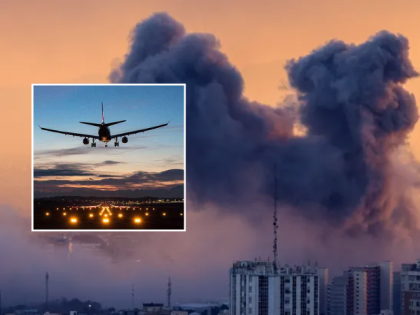
USA-Israel-Iran War: ‘Under Severe Mental Stress,’ Says Family of Pune Residents Stuck in Abu Dhabi; Seeks Centre’s Help
Two people from Pune’s Daund region are stuck in Abu Dhabi amid the ongoing US-Israel-Iran war. Family members of Supriya Swapnil Nale and Swapnil Nagesh Nale requested the Indian government to bring them, and other Indians stuck in the UAE, back to India. A family member told IANS, “In these circumstances, my niece and many other Indians who are currently in Iran, Abu Dhabi, and Dubai are stranded. All of them are under severe mental stress due to the situation.” Another family member told IANS, “My niece and son-in-law are currently in Abu Dhabi for work. I request the government to make every possible effort to bring them back to India safely, along with all other Indians who are there.”
Pune, Maharashtra: Supriya Swapnil Nale and Swapnil Nagesh Nale from Daund are reportedly stranded in Abu Dhabi amid tensions in the Middle East
— IANS (@ians_india) March 6, 2026
Their family member says, "My niece and son-in-law are currently in Abu Dhabi for work. I request the government to make every… pic.twitter.com/H6OKXKtHnJ
Pune, Maharashtra: Supriya Swapnil Nale and Swapnil Nagesh Nale from Daund are reportedly stranded in Abu Dhabi amid tensions in the Middle East
— IANS (@ians_india) March 6, 2026
Their family member says, "...In these circumstances, my niece and many other Indians who are currently in Iran, Abu Dhabi, and Dubai… pic.twitter.com/Zyv60035FZ
More than 19,000 flights have been cancelled across seven major Middle East airports, including those in Dubai and Abu Dhabi in the UAE. Data from Flightradar24 shows that the highest number of cancellations occurred on March 1, 2, and 3, with over 3,300 flights cancelled on each of those days.
The figures cover cancellations at Dubai International Airport in Dubai (UAE), Hamad International Airport in Doha (Qatar), Zayed International Airport in Abu Dhabi (UAE), Sharjah International Airport in Sharjah (UAE), Kuwait International Airport in Kuwait City (Kuwait), Bahrain International Airport in Manama (Bahrain), and Al Maktoum International Airport in Dubai (UAE).
Flight cancellations recorded since February 28 are as follows:
- Feb 28: Over 1,400 flights
- Mar 1: Over 3,400 flights
- Mar 2: Over 3,400 flights
- Mar 3: Over 3,300 flights
- Mar 4: Over 3,200 flights
- Mar 5: Over 3,000 flights
- Mar 6: Over 1,300 flights
- Total cancellations over seven days: more than 19,000 flights.
After several days of major travel disruptions across the Middle East, Abu Dhabi’s primary aviation hub, Zayed International Airport, has started restoring limited flight operations, bringing cautious relief to thousands of stranded travellers as regional airspace gradually reopens. The partial resumption follows widespread flight suspensions triggered by rising geopolitical tensions in the region, which forced airlines to cancel or reroute services and left major Gulf airports functioning under emergency protocols.
Airport authorities confirmed that restricted operations at Zayed International Airport have restarted in coordination with the Abu Dhabi Emergencies, Crises and Disasters Management Centre. The carefully managed reopening comes after days of close coordination between aviation authorities, airlines and government agencies aimed at ensuring passenger safety and operational preparedness.
During the disruption, Abu Dhabi authorities rolled out extensive support measures for travellers affected by cancellations and delays. More than 7,000 passengers were provided accommodation in over 4,300 complimentary hotel rooms across 74 hotels throughout the emirate while they waited for flights to resume.
Despite the restart, the airport has not yet returned to normal commercial operations. Only a limited number of flights — including repositioning, cargo and repatriation services — are currently permitted under strict aviation supervision. Across the region, airlines have resumed only select flights after major disruptions linked to tensions involving Iran, the United States and Israel, which led several countries to close their airspace.
Some Gulf carriers have begun operating restricted services mainly focused on repatriation and essential travel, while regular passenger flights remain partially suspended. The gradual reopening of airports across the United Arab Emirates, including those in Dubai and Abu Dhabi, is part of a coordinated effort to stabilise regional aviation networks.
Authorities have advised travellers not to head to the airport without confirmation from their airline. Passengers with confirmed bookings are urged to contact their airline for the latest updates on schedules and departure timings before travelling to the airport. With the security situation still evolving, flight schedules may change at short notice depending on airspace availability and safety conditions.
Open in app