
S. Korea holds key rate steady as Middle East war fuels inflation
By IANS | Updated: April 10, 2026 09:10 IST2026-04-10T09:09:13+5:302026-04-10T09:10:22+5:30



Seoul, April 10 South Korea's central bank kept its benchmark rate unchanged on Friday, as uncertainty in the ...
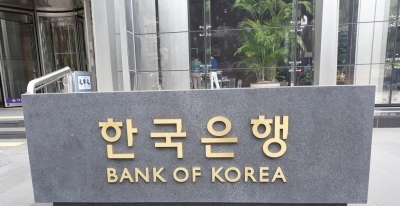
S. Korea holds key rate steady as Middle East war fuels inflation
Seoul, April 10 South Korea's central bank kept its benchmark rate unchanged on Friday, as uncertainty in the Middle East prompted a cautious stance amid risks of inflation, currency weakness and slower growth.
In a widely anticipated decision, the Monetary Policy Board of the Bank of Korea (BOK) held the key rate steady at 2.5 percent in its latest rate-setting meeting in Seoul, reports Yonhap news agency.
It marked the seventh consecutive on-hold decision, even as the central bank remains in an easing cycle.
The BOK began monetary easing in October 2024 and has cut the benchmark interest rate by a cumulative 100 basis points from 3.5 percent to support economic growth, but it has kept it unchanged since July 2025.
"There is a high degree of uncertainty surrounding the future course of developments in the Middle East, amid rising upside pressures on inflation, increasing downside risks to growth and heightened volatility in financial and foreign exchange markets stemming from the Middle East war," the BOK said in a released statement.
The rate freeze decision was unanimous, the BOK noted.
"Today's decision was not simply a postponement of judgment, but reflects the need to take a closer look at the development of the Middle East conflict and its spillover effects before setting policy. If the supply shock is temporary, we do not respond with interest rate adjustments," BOK Gov. Rhee Chang-yong told a press briefing.
Experts said the BOK faces a difficult policy trade-off as the Middle East conflict that began late February following U.S.-Israeli strikes on Iran has escalated into a broader regional crisis, intensifying inflationary pressures and foreign exchange volatility.
Consumer prices rose 2.2 percent in March from a year earlier, up from 2 percent in February, due mainly to a surge in global oil prices amid supply disruptions.
While inflation remains close to the 2 percent target, the modest increase in March was largely afforded by the government's fuel price cap and lower volatility in fresh food prices, and the BOK has warned that upward pressure could build further as the impact of the Middle East conflict spreads.
"Consumer price inflation for the year is expected to exceed considerably the February forecast of 2.2 percent," the BOK said.
The Korean won has weakened markedly in recent sessions, hovering around the psychologically significant 1,500 level, its weakest since 2009, when the country grappled with the global financial crisis.
Concerns over inflation and further currency weakness persist as a seemingly fragile two-week ceasefire between the U.S. and Iran keeps uncertainty high, while global oil prices are unlikely to return to pre-conflict levels, according to analysts. The local currency is also being weighed down by sustained net selling of local stocks by foreign investors.
A rate cut could trigger capital outflows, potentially adding further pressure on the currency, according to experts.
Disclaimer: This post has been auto-published from an agency feed without any modifications to the text and has not been reviewed by an editor
Open in app