
CSR activities should be seen as minimum threshold, not limitation: Piyush Goyal
By ANI | Updated: January 6, 2026 19:15 IST2026-01-07T00:43:38+5:302026-01-06T19:15:04+5:30



New Delhi [India], January 6 : Commerce Minister Piyush Goyal on Tuesday emphasised that the fight against malnutrition must ...
CSR activities should be seen as minimum threshold, not limitation: Piyush Goyal
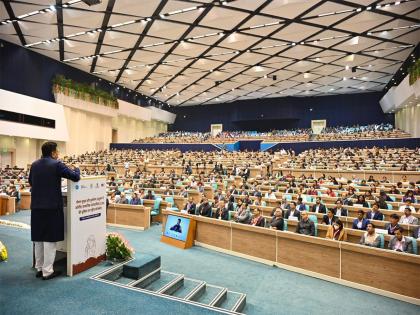
New Delhi [India], January 6 : Commerce Minister Piyush Goyal on Tuesday emphasised that the fight against malnutrition must be pursued as a collective national responsibility, involving government, corporates, communities and individuals alike.
Addressing a CSR Conclave on Nutrition organised by the National Dairy Development Board (NDDB) in the national capital, the Minister said that eliminating malnutrition is essential for building a Viksit Bharat and securing the country's long-term social and economic future.
Goyal said that Corporate Social Responsibility (CSR) provides a unique opportunity to link business with social impact, particularly in addressing malnutrition.
While the law mandates companies to spend 2 per cent of their net profits on CSR activities, he said this should be seen as the minimum threshold and not a limitation.
He described CSR not as a burden, but as a valuable opportunity to contribute meaningfully to society.
Highlighting that the spirit of service is deeply embedded in India's history, culture and traditions, Goyal said that many individuals and organisations voluntarily commit a portion of their profits to social causes, far exceeding the mandated Corporate Social Responsibility (CSR) requirement.
He said the current programme serves as a wake-up call for all stakeholders to intensify efforts against malnutrition.
Goyal said that malnutrition is a complex challenge that requires coordinated action.
Goyal highlighted that the programme is a strong example of inter-ministerial coordination, with the Ministry of Commerce and Industry, the Department of Animal Husbandry and Fisheries, the Ministry of Cooperation, the Ministry of Panchayati Raj, and the Ministry of Women and Child Development working together in line with the Prime Minister's vision of a "whole-of-government approach", under which all departments work in synergy to address national priorities.
When the entire government moves together, programmes become more effective and impactful at the grassroots level, he added.
Goyal said that NDDB is playing the role of an umbrella organisation in this programme, enabling collaboration between government and industry. He highlighted the critical role of the Department of Animal Husbandry and Fisheries in ensuring access to nutritious food, particularly milk and fish, which are rich sources of nutrition. Through government-supported institutions, nutritious food can be made available at affordable prices to address malnutrition, he said.
The Minister underscored the central role of the Ministry of Women and Child Development in addressing the root causes of malnutrition. He said that ensuring proper nutrition during pregnancy and early childhood is crucial, as malnutrition often begins even before birth. Adequate nutrition for pregnant women and children during their formative years significantly improves long-term health outcomes, he noted.
Emphasising the importance of saturation, Goyal said that programmes must reach every village, every household and every section of society. He said this initiative connects corporates with beneficiaries and ensures that different stakeholders play their respective roles in reaching the grassroots.
Goyal said the Prime Minister consistently emphasises innovation and innovative financing, as the government alone cannot address malnutrition. He described the programme as an innovative model that links CSR directly with nutrition outcomes. By connecting corporates, PSUs and industry with the fight against malnutrition, the initiative creates shared value for society and the economy, he said.
The Minister said that addressing malnutrition also benefits farmers by increasing income through fisheries and animal husbandry. He noted that a single programme can simultaneously benefit farmers, women and children, and that large participation from these groups demonstrates the inclusive nature of the initiative.
From a management and policy perspective, Goyal stressed the need for root cause analysis. He said that to eliminate malnutrition sustainably, interventions must focus on pregnancy and early childhood, and continue through the growing years to prevent stunting and underweight conditions.
He added that initiatives such as Fit India, yoga and sports also contribute to healthier lives, and that a malnutrition-free India is fundamental to achieving the goal of a developed nation. He noted that globally, the fight against malnutrition is a priority under the Sustainable Development Goals, and that access to clean drinking water through initiatives such as the Jal Jeevan Mission also plays a role by preventing diseases that lead to malnutrition.
Appealing to corporates, Goyal said that investing in nutrition is an investment in India's future workforce, future markets and future economic growth. Healthy children grow into healthy, productive and employable citizens, which benefits businesses by creating future employees and consumers, he said.
Calling for a people's movement against malnutrition, Goyal said that CSR should not be confined to corporates alone. He encouraged individuals to use personal milestones and celebrations as opportunities to serve society, including feeding children in orphanages and patients in hospitals.
The Minister assured participants that the government is keen to receive new ideas and constructive suggestions through appropriate channels, including the Prime Minister's website and concerned ministries. He expressed confidence that with collective effort, innovation and active participation of society, the goal of a malnutrition-free India is achievable.
Disclaimer: This post has been auto-published from an agency feed without any modifications to the text and has not been reviewed by an editor
Open in app