
India's growth seen moderating amid global uncertainty, tariff risks: Chief Economist, India Ratings
By ANI | Updated: January 6, 2026 16:15 IST2026-01-06T21:41:11+5:302026-01-06T16:15:04+5:30


New Delhi [India], January 6 : India's economic growth is expected to moderate in the coming years amid a ...
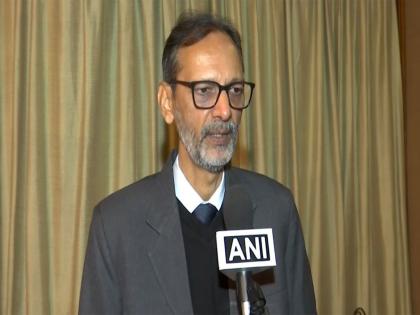
India's growth seen moderating amid global uncertainty, tariff risks: Chief Economist, India Ratings
New Delhi [India], January 6 : India's economic growth is expected to moderate in the coming years amid a rapidly changing global environment, evolving climate risks and rising trade uncertainties, according to Devendra Kumar Pant, Chief Economist and Head of Public Finance at India Ratings & Research.
Speaking with ANI, Pant said India's GDP growth is currently estimated at 7.4% for the ongoing fiscal year and is likely to moderate to around 6.9% in the next fiscal year. He cautioned, however, that these numbers are subject to revision as the base year for national income accounting will change from 2011-12, with revised GDP figures expected to be released on 27 February.
"It is very difficult to put a precise medium-term number at this stage because things are changing very fast," Pant said, highlighting the global economic landscape and the impending change in the GDP base year.
Pant further noted that consumption demand remains the biggest driver of India's growth, with rural consumption supporting it strongly over the past two years. Consumption growth is expected to remain robust at around 7.4% this year and continue at a similar pace next year, provided current trends persist.
However, he flagged risks from a potential El Nino event by mid-2026, which could impact agricultural output and, in turn, consumption demand.
"The biggest medium-term uncertainty for India's growth outlook stems from higher global tariffs, particularly on Indian goods. He said current growth projections assume a weighted average tariff of 38.6%, sharply higher than the nearly 3% level prevailing until January 2025," he said.
"If such high tariffs continue, we will need some kind of growth kicker," he said, adding that future growth will depend on the impact of policy reforms already undertaken and those expected going forward.
For FY26, India Ratings expects a tax revenue shortfall of about Rs 2 lakh crore, almost equally split between direct and indirect taxes. Pant explained that this is partly due to revisions to GDP estimates for FY25, which turned out higher than assumed in last year's Budget.
As a result, while fiscal slippage may occur in absolute rupee terms, the fiscal deficit as a percentage of GDP is expected to remain contained at around 4.4%, helped by the larger economic base.
Pant said capital flows have remained challenging, though some marginal improvement is expected. India Ratings estimates the current account deficit (CAD) at 1.3% of GDP this year, rising slightly to 1.5% next year.
"The net external balance, measured as the current account plus net foreign direct investment, is projected to deteriorate marginally to 0.8% of GDP next year, from 0.7% this year," he said.
On liquidity conditions, Pant said credit growth has picked up in recent months, though deposit growth continues to lag credit growth. Slower nominal GDP growth has moderated individual income growth, which in turn has affected deposit mobilisation. He added that stronger consumption and investment activity could further boost credit demand.
Pant noted that India continues to actively pursue trade agreements and has already concluded deals with Oman, the UK and New Zealand, indicating that India could see further movement on customs duty reforms, recalling that major changes were last undertaken after the 1991 economic reforms.
He added that the 16th Finance Commission's recommendations on tax devolution to states will play a crucial role in shaping future fiscal space and the government's ability to intervene in the economy.
Pant said the 6.9% growth estimate for next year assumes current US tariff levels remain unchanged. Any increase in tariffs could lower growth further, while a reduction could push growth closer to 7%.
"In short, growth will depend heavily on how global trade policies evolve and how domestic reforms support the economy," he said.
Disclaimer: This post has been auto-published from an agency feed without any modifications to the text and has not been reviewed by an editor
Open in app