
China bides its time, watching Trump's violatile policies
By ANI | Updated: April 8, 2026 16:20 IST2026-04-08T21:48:30+5:302026-04-08T16:20:15+5:30



Hong Kong, April 8 : Beijing, along with the rest of the world, is presumably watching with dropped jaws ...
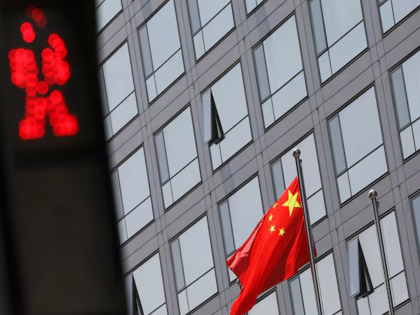
China bides its time, watching Trump's violatile policies
Hong Kong, April 8 : Beijing, along with the rest of the world, is presumably watching with dropped jaws as America's political leadership behaves like a bull in a china shop. Washington DC's foreign policy is unpredictable in nature, as President Donald Trump continues to prosecute his war against Iran.
It was ironic that Trump even called on China, the USA's major strategic competitor, to help open the Strait of Hormuz after his own military actions closed it. "I think China should help too, because China gets 90% of its oil from the straits," Trump asserted. Unsurprisingly, Beijing refused involvement.
Evan A. Feigenbaum, Vice President for Studies at the Carnegie Endowment for International Peace, lamented: "After ten years of dark American warnings about the need to constrain China's global ambitions, we've truly crossed into a bizarro world when the president appears to be begging Beijing for an expeditionary naval deployment. American national security elites have spent years yakking about China's global ambitions to literally everyone in every region, including about an expeditionary capability that would challenge American power and, the US claimed, undermine global stability. To now turn on a dime and literally invite a Chinese deployment is nakedly hypocritical, but also, in my view, strategic malpractice."
Feigenbaum added, "It's not hard to presume that US commanders will hardly welcome a direct Chinese security role in a region where the US had tried to minimise and bound China's security role beyond Iran. And so to flip overnight from demanding that the region reduce technology cooperation, reject Chinese infrastructure and avoid broadened security cooperation with China is, well, surreal."
He pointed out, too, that while burden sharing is a reasonable expectation in alliances, it definitely is not with strategic competitors and prospective military adversaries.
Furthermore, Trump's assertion about 90% of Chinese oil travelling via the Strait of Hormuz is patently false. The figure is, at highest, 45%, and the Chinese economy is well-positioned to ride out the energy crisis precipitated by Trump. Indeed, Beijing has diversified its energy sources in order to mitigate such scenarios. Crude oil and liquefied natural gas account for just 28% of China's primary energy consumption, one of the world's lowest dependency rates. Rather, alternative and renewable energy sources like nuclear, hydro, wind and solar account for 40% of Chinese electricity generation.
China's second strategic move to insulate itself was to increase its oil reserves, now sitting at 1.2 billion barrels according to the government. This is sufficient to keep China running 110 days without any replacement oil coming in.
Thirdly, China accesses oil and gas from a diverse range of nations, including Russia, so it is not wholly reliant on Middle East oil.
Some analysts think the current oil crisis will trim China's gross domestic product forecast by just 0.2%, which is half the 0.4% predicted impact on the USA, and 0.7% on other Asian economies.
While China is well placed to ride out the effects of the Iran war, Mick Ryan, a former major general in the Australian Army, wrote on his Futura Doctrina website about important lessons that Chairman Xi Jinping will be drawing from the conflict. "While the war may prove encouraging lessons for Xi, particularly with regard to American strategy development and execution, other aspects will be more discouraging for the Chinese. It is important that we understand what Xi might learn from the Iran war, because it will shape allied deterrence efforts in the Pacific to limit Chinese military aggression, including diplomatic, information, technological and military efforts."
Ryan highlighted five strategic insights for Xi from the Iran war. The first is Trump's method of fighting one war at a time. "The lesson for Taiwan: a deeply distracted United States, fighting a war it did not fully anticipate, with a president who has publicly stated he doesn't need allies, may have a diminished capacity to pivot rapidly to a Taiwan contingency."
A second lesson is the impact of global trade disruption. "Beijing is observing that its refusal to cooperate carries no immediate cost. Xi's lesson from the Iran war, however, is that Washington can absorb economic shock in the short term if a president is willing to accept political pain." Conversely, though, this war illustrates the limits of American endurance when policies are made impulsively.
Third is the double-edged nature of the US president's unpredictability. "Trump's impulsiveness cuts both ways for Beijing. It is a risk - he might act on Taiwan more forcefully than any previous president. But it is also an opportunity: a president who acts without consulting allies, who publicly attacks NATO while demanding their help, and who measures success in terms of personal narrative, is one whose strategic red lines are opaque even to his own government. Xi may calculate that Trump can be managed through flattery, deals and economic incentives in ways that a more institutionally constrained president could not."
A fourth lesson that Ryan draws in his Futura Doctrina assessment is the USA's faltering strategic decision-making. "The Trump administration has transformed the National Security Council from a sophisticated interagency coordination mechanism into a thin shell around presidential instinct. The Iran war is the first major live test of this hollowed-out architecture." This is reassuring for Xi, for the US system is already generating widespread confusion without need for any nefarious Chinese input.
A fifth lesson is that America's blind spot is the information domain. The USA is inflicting massive wounds upon itself over the credibility of its information, resulting in a global audience increasingly discounting American official narratives.
"This creates an enormous opportunity for Chinese information operations in a Taiwan contingency: if Beijing can frame a Taiwan blockade as a defensive operation against US provocations, a significant portion of the Global South - already accustomed to American narrative inflation - may be receptive." It could then frame a PLA invasion of Taiwan as a domestic matter and that any US action is unprovoked aggression. One factor constraining Xi from a Taiwan invasion is his preoccupation with ideological purity. Just as US Secretary of War Pete Hegseth has dismissed more than a dozen top military leaders since assuming office in January 2025 - primarily for ideological reasons - so Xi too has decimated the upper ranks of the People's Liberation Army (PLA).
The statistics are astounding. Of 47 PLA leaders who were generals in 2022 or promoted to three-star positions after that, 41 (87%) were purged or potentially purged whilst either in office or after retiring. Worryingly for Xi's ability to judge character, of the 35 PLA three-star generals and admirals that he promoted from 2020 onwards, 32 appear to have been investigated and 29 were subsequently confirmed or potentially purged.
As the US-based Center for Strategic and International Studies noted, "Having gutted the PLA's leadership, Xi Jinping will have to turn to reconstituting the military high command in the coming years. Xi has significant choices to make, including whether he wants to keep the existing leadership structure or implement more changes to the size, composition and configuration of the Central Military Commission as well as subordinate organisations. Depending on what Xi intends to do, this could take years or even longer to see the full transformation."
Xi, in a 7 March speech, told the PLA "it is imperative to uphold, utilise and develop the important magic weapon of building the military politically; unswervingly uphold and strengthen the party's absolute leadership over the military; give full play to the unique advantages of building the military politically; and concentrate efforts to promote the steady and long-term modernisation of national defence and the armed forces."
Xi also stated, "The military wields the gun; there must be no one in the military who harbours disloyalty to the party, and there must be no hiding place for corrupt elements. The fight against corruption must be resolutely advanced."
Another positive factor - albeit temporary - for China is that the USA has diverted military assets out of the Indo-Pacific region, prominent among them the Japan-based 31st Marine Expeditionary Unit (MEU), with the 11th MEU also believed to be en route to the Middle East. Perhaps even more alarming is the prolific expenditure of US weapon stockpiles, particularly of precision-guided missiles, which reduces magazine depth for any major contingency against China.
Dr Malcolm Davis, Senior Analyst at the Australian Strategic Policy Institute (ASPI), questioned the Trump administration's supposed commitment to "balancing" and "deterring" China. He said, "In reality, the administration - and Trump specifically - sees China more in terms of trade and economic competition, which can be resolved by doing a deal, rather than confronting a military threat."
Davis noted the PLA is already set to run away from every other Indo-Pacific military in terms of fielding autonomous systems and strike weapons. "Quantity has a quality all of its own. If this is what eventually comes to pass, then it will be up to US Indo-Pacific allies to step up and fill the gap as best they can. Japan, South Korea and Australia in particular will need a larger and more powerful navy and make greater use of robotic and autonomous systems to build quantitative strength along with investments in long-range strike, more sophisticated integrated air and missile defence, and better and more resilient space and terrestrial intelligence, surveillance and reconnaissance."
Trump may have already painted himself into a corner. Bombing Iranian energy and other infrastructure, as he recently threatened to do, will invite similar retaliation on Gulf states. Davis pointed out, "He may be realising that there is simply no credible path to actual 'victory', short of massive commitment of ground forces, which would see massive domestic opposition, including within his own base."
Yet if Trump declares "victory and disengages from the war, even with Iran still blocking the [Hormuz] Strait, that would be clearly seen as a US defeat. Iran will have emerged as the hegemonic power; it'll control access through the strait, and it'll seek to restore its nuclear weapons programme and missile capabilities quickly. That would be a huge blow to US strategic credibility and embolden China and Russia to behave more aggressively. The risks of miscalculation or deliberate action by Beijing and Moscow leading to a new, larger war would be real."
Davis warned that if this war "does end with US strategic failure, then I think there is a real risk of adventurism by Russia against the Baltic states or China against Taiwan sooner as a result".
China's priorities were evident in its 15th Five-Year Plan, launched at the so-called Two Sessions in mid-March 2026. Analysing the meetings, Ryan Hass, Director of the John L. Thornton China Center at the Brookings Institute, said, "The message coming out of Beijing is that China views itself as playing a different geopolitical game than US. Notwithstanding Trump's more conciliatory tone on China, Beijing is signalling its expectation of long-term competition. China's leaders appear to view the superstructure of the United States as being committed to constraining China's progress well into the future."
Indeed, Xi's mantra is to boost Chinese self-reliance in critical technologies, as reflected in the plan's reference to "winning the battle for key core technologies".
Hass noted, "China clearly sees tech as the core of US-China competition and the key factor that will influence distribution of power."
The American academic concluded: "The takeaway for me is that China is playing a different geopolitical game than the US. While the US is busy abroad, Beijing is focusing at home on what it views as the central question of our time - how to strengthen self-reliance and build a lead in core technologies."
China certainly has time on its side. As the USA diminishes stocks of critical weapons that might one day be needed for a potential conflict with the PLA, and as Trump rages at Iran and the USA is preoccupied by the Middle East, China continues to strengthen its position militarily and diplomatically. After all, as Bonaparte Napoleon stated, "Never interrupt your enemy while he's making a mistake."
Disclaimer: This post has been auto-published from an agency feed without any modifications to the text and has not been reviewed by an editor
Open in app