
India monitoring Iran protests closely; relationship remains 'firm and strong' amid regional volatility: Former envoy
By ANI | Updated: January 6, 2026 16:20 IST2026-01-06T21:49:13+5:302026-01-06T16:20:08+5:30


By Sahil Pandey Panchkula (Haryana) [India], January 6 : As protests in the Islamic Republic of Iran enter their ...
India monitoring Iran protests closely; relationship remains 'firm and strong' amid regional volatility: Former envoy
By Sahil Pandey
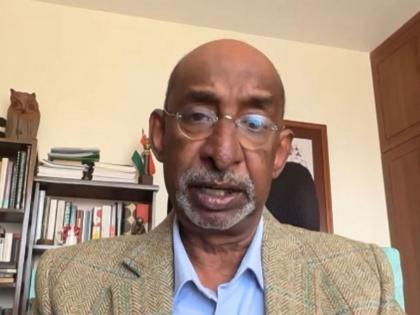
Panchkula (Haryana) [India], January 6 : As protests in the Islamic Republic of Iran enter their second week, former Indian Ambassador to Iran Gaddam Dharmendra on Tuesday described the unrest as an "economic protest" driven by distress, inflation, and unemployment. He noted that while protests are not unusual in the country, the participation of the influential trading class and students marks a significant development.
Speaking to ANI, Dharmendra highlighted that the current wave of demonstrations, which began in late December, is primarily rooted in domestic economic grievances.
"This is an economic protest driven primarily by the distressed economic situation in the country, the high inflation rates, and high unemployment. Unusually, this time, a very influential segment of society, which is the trading class, came out on the street. They shuttered shops, and they took to the streets, which is very unusual," the former Ambassador said.
He added that while students quickly joined the movement, the intensity appears to be fluctuating.
"To date, from a peak of about 3,000 plus demonstrators, we have now come down to half that number. The number of protests seems to decline," he observed.
The Ministry of External Affairs (MEA) recently issued an advisory urging Indian citizens to avoid non-essential travel to Iran. Dharmendra hailed this as a "timely" move to ensure the safety of the over 3,000 Indian students in the country.
"These advisories help to assure our people that the government is closely monitoring the developments and we are prepared for any contingency," he said.
Despite the internal unrest, Dharmendra emphasised that the core bilateral relationship between New Delhi and Tehran remains stable, particularly with Iran's recent inclusion in BRICS and the strategic importance of the Chabahar port.
"Our main relationship with Iran remains strong. Iran is a member of BRICS, so I think that gives us greater opportunities to engage the Islamic Republic. We have a major engagement with Iran in the Chabahar port. There have been no reports of major disturbances from Chabahar," he noted.
Commenting on the global shockwaves caused by the US capture of ousted Venezuelan leader Nicolas Maduro on January 3, Dharmendra suggested that Tehran would be watching the situation with concern, given its close ties to Caracas.
"Iran has close relations with Venezuela. Iran will be calculating its developments, as will other countries. The short answer in the immediate short run would be what will be the follow-up of Venezuela on these kinds of funding activities for Hezbollah and for Iran," Dharmendra added.
Disclaimer: This post has been auto-published from an agency feed without any modifications to the text and has not been reviewed by an editor
Open in app