
Pakistan, China’s foreign ministers’ meeting reflects new South Asia designs
By IANS | Updated: January 6, 2026 17:00 IST2026-01-06T16:55:20+5:302026-01-06T17:00:26+5:30



New Delhi, Jan 6 Beijing and Islamabad are actively deepening diplomatic, economic, and security ties with Afghanistan and ...
Pakistan, China’s foreign ministers’ meeting reflects new South Asia designs
New Delhi, Jan 6 Beijing and Islamabad are actively deepening diplomatic, economic, and security ties with Afghanistan and Bangladesh in ways that can reduce India’s influence, chiefly through dialogues, offers to extend economic and military cooperation to the South Asian countries.
China has positioned itself as a mediator and convenor on Afghan issues, hosting talks and framing its engagement as reconstruction and counter‑terrorism cooperation rather than zero‑sum geopolitics.
“The two sides expressed readiness to continue leveraging the China-Afghanistan-Pakistan Trilateral Foreign Ministers’ Dialogue and the China-Bangladesh-Pakistan cooperation mechanism to deliver new outcomes,” said a statement released after the seventh round of China-Pakistan Foreign Ministers’ Strategic Dialogue.
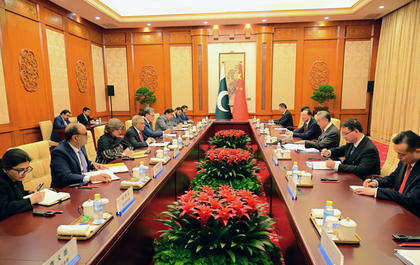
China’s Foreign Minister Wang Yi and his counterpart from Pakistan, Mohammad Ishaq Dar, met in Beijing January 3-5 for the dialogue, following which, the joint statement bears clear testimony to their common goal. After direct and indirect interventions from Turkey, Qatar, Iran, among others, China has now entered the arena – at Islamabad’s behest – to try and get Pakistan and Afghanistan to end hostilities.
“The two sides (China-Pakistan) called for more visible and verifiable actions to dismantle and eliminate all terrorist organisations based in Afghanistan, which continue to pose serious threats to regional and global security, and prevent terrorist organisations from using the Afghan territory for terrorism against any other country and to endanger any other country,” said the joint communique.
However, Kabul vehemently denies the existence of any terror groups in its territory, and claims that attacks within Pakistan are an internal matter for Islamabad to address. Similarly, China and Pakistan “expressed readiness to continue leveraging the China-Afghanistan-Pakistan Trilateral Foreign Ministers’ Dialogue and the China-Bangladesh-Pakistan cooperation mechanism to deliver new outcomes”.
They further agreed to build “an upgraded version 2.0 of the China-Pakistan Economic Corridor (CPEC)”, which is part of China’s ambitious Belt and Road Initiative (BRI), and “welcomed third-party participation in CPEC cooperation that conforms with the modalities set by China and Pakistan”.
Reports have earlier indicated plans of extending CPEC into Afghanistan, which would offer Kabul large-scale infrastructure and investment alternatives to India’s projects.
For Islamabad, large BRI projects have raised concerns about rising external liabilities and project viability, though Pakistan and China frame many loans as development finance.
Meanwhile, China has increased its footprint in volatile Bangladesh through infrastructure, military cooperation, and port developments. Countries falling in its line need to take a lesson from those have fallen — or are at risk of falling — into a “China debt‑trap”.
Such countries include Pakistan, Sri Lanka, Djibouti, Laos, Montenegro, Kenya, Zambia, the Maldives, and Indonesia. The outcomes vary by project, contract terms, and the country’s fiscal management.
Nations availing large, China‑backed loans leave them struggling to repay, giving Beijing strategic leverage, with some showing clear distress, others fighting to balance their finance.
Taking note of Beijing’s forays, a recent report from India’s Parliamentary Committee on External Affairs on “Future of India-Bangladesh Relationship” has noted with concern its “increasing presence” in the neighbouring country.
On China visits by Jamaat-e-Islami leaders, it said, “clearly indicates its broad engagement with various factions in Bangladesh, further solidifying its presence”.
The report added, “concerned to know that a submarine base has been built by China at Pekua, capable of accommodating eight submarines when Bangladesh has only two”.
China wants to establish itself in South Asia and gain access to regional routes, local resources, and set up surveillance and defence bases.
Pakistan seeks to reduce India’s footprint in Afghanistan and Bangladesh, build relations with Kabul and Dhaka on its terms as a strategic depth objective.
Extending CPEC or other BRI projects would open new markets and transit corridors for China while giving Pakistan leverage through shared projects. India’s traditional role in Afghanistan has been concentrated on humanitarian relief and infrastructure development without granting official recognition to the Taliban authorities.
A Pakistan‑aligned Kabul could complicate New Delhi’s counterterrorism and strategic calculations in the region.
--IANS
Disclaimer: This post has been auto-published from an agency feed without any modifications to the text and has not been reviewed by an editor
Open in app