
Pakistan’s economic crisis deepens as exports shrink
By IANS | Updated: January 6, 2026 16:15 IST2026-01-06T16:14:23+5:302026-01-06T16:15:34+5:30


New Delhi, Jan 6 A sharp fall of 20.4 per cent in Pakistan’s exports in December -- the ...
Pakistan’s economic crisis deepens as exports shrink
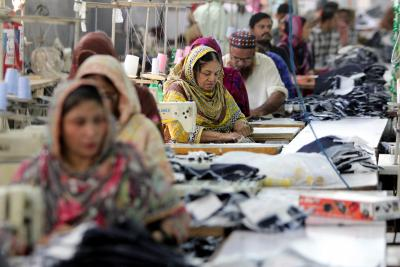
New Delhi, Jan 6 A sharp fall of 20.4 per cent in Pakistan’s exports in December -- the fifth consecutive month of declining overseas shipments of the country -- underscores that the slump stems from structural factors and can no longer be dismissed as a temporary setback, according to an article in the local media.
The article in the Dawn observed that Pakistan’s poor export performance has always remained the weakest link in its external sector stability chain. This has become even more pronounced in recent years amid drying foreign official and private fund flows, which successive governments used to prop up the feeble balance-of-payments position.
The sustained export contraction heightens the risks to the nation’s external sector recovery as growing imports threaten to erode the gains achieved through demand compression over the past two years, the article said.
Imports crossing the $6bn mark last month for the first time during the current fiscal year signal that a policy shift towards trade normalisation and liberalisation has revived import demand faster than anticipated, the report pointed out.
In absolute terms, the $118m boost in imports is quite modest given the country’s size and consumption trends. But when juxtaposed with the sharp contraction in exports, it pushes the monthly trade deficit up by 25pc to $3.7bn. The six-month cumulative picture of trade imbalance is even more worrisome. The $19.2bn trade deficit posted in the July-December period is 35 per cent higher than last year, the article further stated.
The State Bank may use strong remittances and its dollar purchases to finance the trade gap and boost reserves for as long as it can. But reliance on this strategy to offset a structurally widening trade gap has its own risks as it leaves the external account vulnerable to geopolitical shocks and host-country labour market changes.
Moreover, sustained intervention to build reserves tightens domestic liquidity and fuels exchange rate pressures. The deteriorating export performance is not a threat only for external sector stability; it also forces policymakers to suppress growth to ward off yet another balance-of-payments crisis. If anything, the latest trade numbers expose a disconnect between stabilisation and sustainability, the article added.
Disclaimer: This post has been auto-published from an agency feed without any modifications to the text and has not been reviewed by an editor
Open in app