
Taiwan protests after Brazil envoy calls island "part of China"; MOFA slams "false" remarks
By ANI | Updated: April 13, 2026 19:00 IST2026-04-14T00:27:44+5:302026-04-13T19:00:17+5:30



Taipei [Taiwan] April 13 : Taiwan's Ministry of Foreign Affairs (MOFA) has filed a formal protest after the head ...
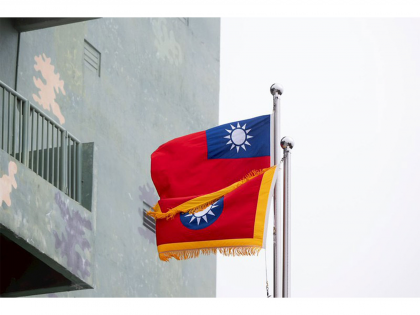
Taiwan protests after Brazil envoy calls island "part of China"; MOFA slams "false" remarks
Taipei [Taiwan] April 13 : Taiwan's Ministry of Foreign Affairs (MOFA) has filed a formal protest after the head of Brazil's Commercial Office in Taipei stated in an interview that Taiwan is part of China, according to a report by the Taipei Times.
Office Director Luis Claudio Villafane Gomes Santos, speaking to an online outlet in an interview published yesterday, said that Taiwan belongs to China and that Brazil does not recognise Taiwan as an independent state.
The ministry expressed strong dissatisfaction with what it described as "false and inappropriate" remarks, adding that it had already communicated its firm protest and concerns to Santos, as cited in the Taipei Times report.
The ministry noted that, under international law, diplomatic representatives are required to avoid interfering in the internal affairs of their host country.
During the interview, Santos reiterated that Taiwan is part of China and that Brazil, like most countries, does not recognise Taiwan as an independent nation.
He also stated that even the chairman of the Chinese Nationalist Party (KMT) in Taiwan shares this perspective.
MOFA said it had formally protested with Santos earlier the same morning.
The Republic of China (Taiwan) is a sovereign and independent country and is not subordinate to the People's Republic of China, the ministry said.
It added that this is a widely acknowledged fact and an objective reality, while strongly condemning Santos' remarks as false and inappropriate, the Taipei Times report noted.
China's claim over Taiwan is a complex issue rooted in historical, political, and legal arguments.
Beijing asserts that Taiwan is an inseparable part of China, a viewpoint embedded in national policy and upheld by domestic laws and international statements.
Taiwan, however, maintains a distinct identity, functioning independently with its own government, military, and economy.
Taiwan's status remains a significant point of international debate, testing the principles of sovereignty, self-determination, and non-interference in international law, as per the United Service Institution of India.
China's claim to Taiwan originates from the Qing Dynasty's annexation of the island in 1683 after defeating Ming loyalist Koxinga.
However, Taiwan remained a peripheral region under limited Qing control.
The key shift came in 1895, when the Qing ceded Taiwan to Japan after the First Sino-Japanese War, marking Taiwan as a Japanese colony for 50 years.
After Japan's defeat in World War II, Taiwan was returned to Chinese control, but the sovereignty transfer was not formalised.
In 1949, the Chinese Civil War resulted in the establishment of the People's Republic of China (PRC) on the mainland, while the Republic of China (ROC) retreated to Taiwan, asserting its claim to govern all of China.
This led to dual sovereignty claims, with the PRC over the mainland and the ROC over Taiwan.
Disclaimer: This post has been auto-published from an agency feed without any modifications to the text and has not been reviewed by an editor
Open in app