
Makar Sankranti 2026: Why Halwa Ornaments Are an Integral Part of Maharashtra’s Sankranti Tradition
By Lokmat Times Desk | Updated: January 16, 2026 22:21 IST2026-01-16T22:19:22+5:302026-01-16T22:21:06+5:30



Makar Sankranti festival filled with joy and happiness with artistry of sesame seed and jaggery ornaments, and their evolving ...
Makar Sankranti 2026: Why Halwa Ornaments Are an Integral Part of Maharashtra’s Sankranti Tradition
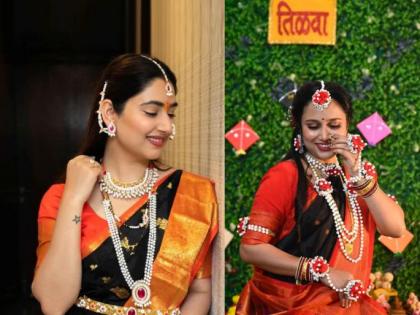
Makar Sankranti festival filled with joy and happiness with artistry of sesame seed and jaggery ornaments, and their evolving form in modern times, this tradition has not only survived but has also reached across the seas.
Let's understand the significance of these sesame seed and jaggery ornaments.
Festivals are marked by celebration, dressing up, and sweet treats. For Makar Sankranti, tradition includes crafting sesame seed and jaggery ornaments and sweets to express affection for newly married couples, daughters-in-law, daughters, and young children.
In recent times, even modern young men and women do not feel any embarrassment in wearing these ornaments. This is because, just like gold and silver jewelry, hundreds of varieties are now available in sesame seed and jaggery ornaments. There is a custom of giving five types of sesame seed and jaggery sweets to the son-in-law during Sankranti. More than 35 varieties are available in the market. These include many edible types of sesame seed and jaggery sweets made with pumpkin seeds, watermelon seeds, muskmelon seeds, puffed rice, fennel seeds, cashews, pistachios, almonds, cloves, and cardamom.
For ornaments, a spiky type of sesame seed and jaggery sweet is made using sago, barnyard millet, vermicelli, and rice. This sweet is then used to create beautiful leaf and flower designs for the ornaments. Previously, the custom was to wear elaborate and prominent ornaments. Since 1995, designer ornaments have gained popularity among girls. Considering customer preferences, new varieties have also appeared in these ornaments.
Mangalsutras, necklaces, earrings, bangles, armlets, and other ornaments adorned with Kundan, sequins, glitter, various types of beads, and sugar candy are made to order. For men, turbans, headgear, necklaces, rings, ear ornaments, and stoles decorated with sugar candy beads are available, along with coconuts decorated with traditional sugar candy beads, incorporating items like mobile phones, pens, and laptops.
For the 'Borhan' ceremony of infants, a 'Vaala set' is made, which includes Lord Krishna's attire, a necklace, garlands, a crown, a flute, and a peacock feather. For young girls, a set consisting of a tiara, necklace, hairpins, earrings, and bangles is available. A variety of ornaments are available for children up to five years of age.
Considering the growing enthusiasm among girls, sugar candy ornaments now also include sarees, hair clips, slippers, and purses decorated with sugar candy. Additionally, sugar candy garlands, similar to traditional floral garlands, are also available for sale. For sons-in-law, gifts tailored to their profession are offered – a sugar candy pen for a writer, a sugar candy airplane for a pilot, and a sugar candy train for a train driver. Now, women even take small and large sugar candy ornaments as gifts for their friends' daughters-in-law, sons-in-law, and babies when they visit for the Tilgul (sesame and jaggery) exchange during Makar Sankranti.
The craze for sugar candy ornaments is no longer limited to Maharashtra or India; it has reached across the seas. This tradition of 'white ornaments' exemplifies how a single festival, tradition, and culture can connect so many things and people. So, let the tradition of joy flourish in your home as well; for that, share sesame and jaggery, speak sweetly, and look sweet!
Open in app