
Why Do Sounds Become Clearer After Yawning? Here’s the Science Behind It
By Lokmat Times Desk | Updated: April 25, 2026 16:49 IST2026-04-25T16:48:51+5:302026-04-25T16:49:03+5:30



Yawning is a natural physiological process of the body, for instance, some people yawn when they feel sleepy, while ...
Why Do Sounds Become Clearer After Yawning? Here’s the Science Behind It
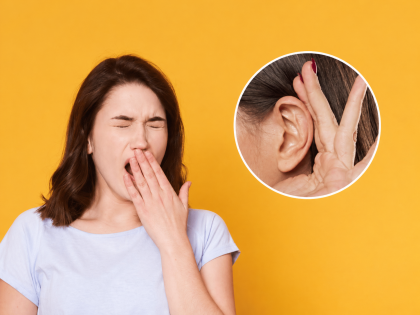
Yawning is a natural physiological process of the body, for instance, some people yawn when they feel sleepy, while others yawn when they feel hungry. Furthermore, in cases of certain physiological imbalances, some individuals may yawn even without feeling either sleepy or hungry. Yawning often leaves one feeling a profound sense of relief and lightness. Interestingly, while some people yawn discreetly and self-consciously, others yawn boldly and loudly without any inhibition.
Everyone yawns, and everyone feels better after doing so. You, too, may have often noticed that immediately after yawning, your hearing seems to become remarkably clearer. Sounds suddenly appear much more distinct following a yawn. There is a scientific explanation behind this phenomenon.
Fundamentally, there is a small tube located within our ears known as the Eustachian tube. This tube serves as a connector between the middle ear and the throat. Under normal circumstances, it remains closed. However, when we yawn, the tension exerted on the mouth and jaw causes this tube to open. Consequently, the air pressure inside and outside the ear becomes balanced, resulting in clearer hearing.
Why Do Sounds Seem Clearer After Yawning?
Two specific muscles within the ear become active while yawning: the Tensor tympani muscle and the Stapedius muscle. For a brief moment, these muscles tighten the tiny bones within the ear, causing a momentary attenuation of sound perception. Subsequently, as these muscles relax, hearing acuity improves, making sounds appear much clearer.
Why Do Ears Feel Blocked During Air Travel?
During air travel, the surrounding air pressure undergoes sudden fluctuations, which often causes the ears to feel blocked or "popped." In such situations, yawning opens the Eustachian tube, thereby equalizing the pressure and instantly relieving the sensation of blockage in the ears.
Another Reason Behind This: Yawning stimulates increased blood circulation throughout the body. This heightened blood flow, in turn, leads to increased activity within the brain. Consequently, we are able to listen to surrounding sounds more attentively.
Expert Opinion
According to experts, yawning may serve as one of the body's natural defense mechanisms. By activating the muscles within the ear, it provides protection against internal sounds—such as one's own voice or the grinding of teeth—and facilitates hearing external sounds more clearly.
Open in app