
Mumbai Bengaluru Vande Bharat Sleeper Gets Nod; Route Includes Pune, Solapur Stations
By Lokmat Times Desk | Updated: April 12, 2026 09:08 IST2026-04-12T09:08:15+5:302026-04-12T09:08:15+5:30



Train travel between Mumbai and Bengaluru is set to become faster and more comfortable, as Indian Railways has approved ...
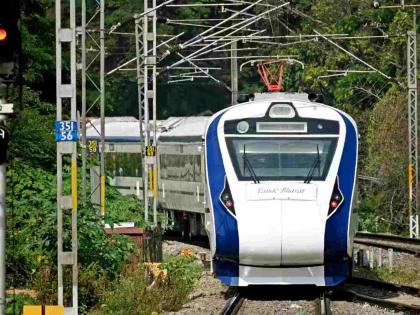
Mumbai Bengaluru Vande Bharat Sleeper Gets Nod; Route Includes Pune, Solapur Stations
Train travel between Mumbai and Bengaluru is set to become faster and more comfortable, as Indian Railways has approved the introduction of a Vande Bharat sleeper service, reported TOI. Key details such as the route, halts, total travel time, and official launch date are expected to be announced soon. Railway Minister Ashwini Vaishnaw conveyed the approval to Bangalore Central MP P. C. Mohan through a formal letter. This development has raised expectations among passengers seeking a quicker and more efficient overnight travel option between the two major cities.
Currently, the Udyan Express, introduced in 1983, remains the primary rail connection between the two cities. Despite advancements in railway technology over the decades, the train continues to operate on relatively slower tracks, taking over 22 hours to complete the 1,139-kilometre journey. In comparison, bus travel on the same route takes approximately 16 hours. Officials clarified that the upcoming Vande Bharat sleeper service will not replace the existing Udyan Express, but will instead provide an additional, faster alternative for passengers travelling between Mumbai and Bengaluru, reported TOI.
The proposed Vande Bharat sleeper train is likely to run via Pune, Solapur, Kalaburagi, Raichur, and Guntakal, following the existing Udyan Express route, reported TOI. The Vande Bharat service is already operational between Mumbai and Solapur, and officials stated there are no technical hurdles in introducing a sleeper version. MP P. C. Mohan said commuters have long demanded a faster and more convenient rail option, reported TOI. Trade activist Sajjan Raj Mehta welcomed the move, noting that in the absence of a superfast train, passengers often rely on buses or costly flights, and suggested the new service should target a travel time of 16 to 17 hours for maximum benefit, reported TOI.
Open in app