
Odisha CM Majhi defends VB-G RAM G Act, slams Oppn's 'anti-poor' & 'anti-farmer' claims
By IANS | Updated: January 6, 2026 23:15 IST2026-01-06T23:11:32+5:302026-01-06T23:15:10+5:30



Bhubaneswar, Jan 6 Odisha Chief Minister Mohan Charan Majhi, on Tuesday, accused the opposition parties of spreading false ...
Odisha CM Majhi defends VB-G RAM G Act, slams Oppn's 'anti-poor' & 'anti-farmer' claims
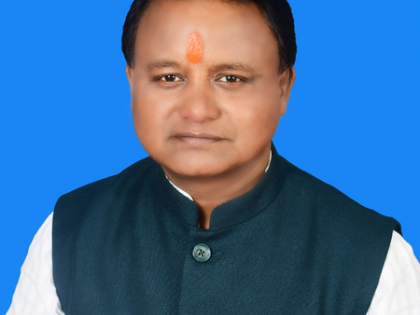
Bhubaneswar, Jan 6 Odisha Chief Minister Mohan Charan Majhi, on Tuesday, accused the opposition parties of spreading false propaganda about the newly enacted Viksit Bharat – Guarantee for Rozgar and Ajeevika Mission (Gramin) Act, 2025, describing the scheme as "anti-poor" and "anti-farmer".
Speaking at a press conference at the state BJP office, CM Majhi said that the primary objective of the VB–G RAM G scheme, which replaces the Mahatma Gandhi National Rural Employment Guarantee Scheme (MGNREGS), is to build a Viksit Bharat by 2047, in line with Mahatma Gandhi's vision of rural self-employment.
He also emphasised that, contrary to Opposition claims, the law includes extensive provisions for the welfare of farmers and workers.
CM Majhi said that, both before and after Independence, several initiatives have been made in India to improve employment opportunities for farmers and the poor.
He also added that these schemes provided that work would be given if it was available.
"However, there was no provision in these schemes to create employment for people proactively. No priority was given to ensuring that people would receive work regularly and that their economic livelihood would improve," CM Majhi said.
He added that the National Rural Employment Guarantee Act (NREGA), launched in 2005, renamed as the Mahatma Gandhi NREGA in 2009.
However, no changes were made to its basic structure.
Chief Minister Majhi alleged that the then UPA government implemented the scheme primarily to gain political dividends by using Mahatma Gandhi's name.
Referring to major scams reported in Bihar and Uttar Pradesh, he claimed that despite more than two decades of implementation, the scheme has remained plagued by widespread irregularities.
He also highlighted the serious irregularities that surfaced in Sambalpur in Odisha in 2012 under the MGNREGS, where wages were fraudulently withdrawn in the names of deceased persons, sick individuals, and beneficiaries already receiving old-age pensions.
"Fake entries were made in muster rolls, and public funds were misappropriated without any road work being executed."
"To prevent such corruption through the use of technology and to ensure the successful implementation of the scheme, Prime Minister Narendra Modi introduced the VB–G RAM G Bill. The new scheme has been designed to effectively implement Mahatma Gandhi's vision of Gram Swaraj and to chart a path toward Viksit Bharat. A framework has been prepared keeping the 2047 goal in mind," CM Majhi said.
Under the new scheme, the guaranteed employment period has been increased from 100 to 125 days. Therefore, the scheme is expected to boost productivity across multiple sectors in rural areas.
The funding pattern has been structured to ensure shared responsibility, with a 90:10 Centre–state ratio for northeastern states and 100 per cent central funding for Union Territories.
For other states, costs will be shared in a 60:40 ratio between the Centre and the state governments.
The scheme focused on four priority areas, including water conservation, rural infrastructure development, livelihood expansion, and climate resilience.
To protect farmers' interests, all scheme-related work will remain suspended during sowing and harvesting seasons for up to 60 days annually, which will help address labour shortages in agriculture and prevent unnecessary increases in wages.
Disclaimer: This post has been auto-published from an agency feed without any modifications to the text and has not been reviewed by an editor
Open in app