
Mumbai: ‘Yeh Kaam Marathi Log Nahi Kar Payenge’, Driver’s Viral Video Fuels Language Debate
By Lokmat Times Desk | Updated: April 26, 2026 17:18 IST2026-04-26T17:16:39+5:302026-04-26T17:18:04+5:30



A viral video circulating on social media has sparked fresh debate over language, labour, and identity within Mumbai’s transport ...
Mumbai: ‘Yeh Kaam Marathi Log Nahi Kar Payenge’, Driver’s Viral Video Fuels Language Debate
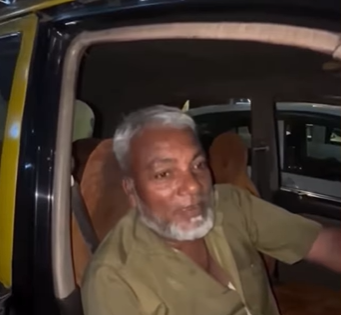
A viral video circulating on social media has sparked fresh debate over language, labour, and identity within Mumbai’s transport sector. The clip features a taxi driver asserting that the city’s daily operations would be significantly disrupted if migrant drivers were to leave. His remarks have drawn widespread attention, with many users discussing the crucial role played by outstation workers in keeping Mumbai’s transport system running smoothly. The video has quickly gained traction online, prompting conversations about dependency on migrant labour and the broader socio-economic dynamics that shape the functioning of the city’s public transport network.
In the video, originally shared by the Instagram page ‘DadarMumbaikar’, the driver highlights the physically demanding nature of the work carried out by taxi and auto-rickshaw operators. He claims that Marathi-speaking locals may struggle to perform such labour, describing it as extremely strenuous. The driver further argues that if workers from other states were to return to their hometowns, Mumbai’s daily life would be severely affected. His comments have triggered mixed reactions, with some agreeing with his perspective, while others have criticised the generalisation about local workers and their capabilities.
The clip has emerged at a time when the Maharashtra government is preparing to strictly implement a rule requiring commercial drivers to have basic Marathi communication skills from May 1. This regulation will apply to taxi drivers, auto-rickshaw operators, and app-based cab services. Authorities have warned that failure to comply with the rule could result in strict action, including the cancellation of driving licences. The decision is aimed at improving communication between drivers and passengers, ensuring smoother daily travel experiences for commuters across the state.
The government’s move comes in response to repeated complaints from passengers regarding communication barriers, especially with drivers from outside Maharashtra. A preliminary review conducted by the Bhayandar Regional Transport Office revealed that several drivers lacked even basic Marathi language skills necessary for routine interactions with commuters. These findings prompted authorities to take corrective measures, recognising the need for better communication in the public transport sector to enhance convenience and safety for passengers relying on these services daily.
Following the assessment, the Transport Department, led by Minister Pratap Sarnaik, has decided to strengthen enforcement of the rule while also introducing organised training programmes. These initiatives are intended to help drivers acquire functional Marathi skills required for everyday conversations with passengers. The government has emphasised that the goal is not to impose linguistic barriers but to equip drivers with practical communication abilities. This approach aims to strike a balance between maintaining service quality and supporting drivers in adapting to local requirements without undue hardship.
Officials have clarified that the rule does not require drivers to achieve full fluency in Marathi but focuses on basic conversational proficiency. Supporting the decision, MNS corporator Yashwant Killedar stated that drivers should be able to understand and use simple Marathi phrases relevant to their work. The emphasis remains on improving passenger-driver interaction rather than enforcing strict linguistic standards. This clarification has been seen as an attempt to address concerns raised by sections of the transport community about the practicality of the regulation.
The policy has gained additional importance following the recent recognition of Marathi as a classical language. While many have welcomed the rule as a step toward enhancing commuter convenience and preserving linguistic identity, others have raised concerns about inclusivity in a city that relies heavily on migrant workers. The debate reflects differing perspectives on how language policies intersect with employment opportunities and urban diversity, particularly in a metropolis like Mumbai, where people from various regions contribute to the workforce.
The viral video has further amplified the ongoing discussion, bringing attention to the complex realities of Mumbai’s labour ecosystem. It underscores the challenges of balancing language requirements with the livelihoods of migrant workers who form a significant part of the transport sector. As the debate continues, the issue highlights the need for thoughtful policymaking that considers both commuter needs and the contributions of a diverse workforce, ensuring that the city’s daily functioning remains efficient while fostering inclusivity.
Open in app