
Mumbai Monorail Update: Services Set to Resume Soon as ₹349.8 Crore O&M Contract Awarded to Power Mech Projects Ltd
By Lokmat Times Desk | Updated: April 26, 2026 16:25 IST2026-04-26T16:25:00+5:302026-04-26T16:25:45+5:30



Commuters in Mumbai may soon experience improved travel convenience as authorities move ahead with plans to restart the long-discontinued ...
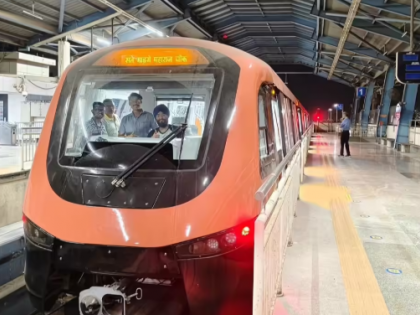
Mumbai Monorail Update: Services Set to Resume Soon as ₹349.8 Crore O&M Contract Awarded to Power Mech Projects Ltd
Commuters in Mumbai may soon experience improved travel convenience as authorities move ahead with plans to restart the long-discontinued monorail service. The revival effort comes as a significant step toward strengthening public transport infrastructure in the city. The Maha Mumbai Metro Operation Corporation Limited (MMMOCL) has finalised a crucial Operations and Maintenance (O&M) agreement aimed at restoring services efficiently, reported the Financial Express. Once operational, the monorail is expected to reduce congestion on busy routes, provide an alternative transit option, and enhance connectivity across key urban stretches, offering relief to thousands of daily commuters.
Five-Year Operations Contract Awarded to Restart Services
In a major development, Maha Mumbai Metro Operation Corporation Limited has awarded a five-year Operations and Maintenance contract to M/s Power Mech Projects Ltd, signalling that monorail services could resume shortly. This agreement is expected to ensure smoother functioning, better upkeep, and improved service reliability for passengers. Authorities believe that appointing a dedicated operator will help address earlier operational challenges and streamline daily functioning. With structured maintenance and operational oversight in place, the monorail system is likely to regain commuter trust while contributing to the city’s broader transport network in a more efficient and sustainable manner.
Contract Value and Key Project Details
The newly awarded contract is valued at approximately ₹349.8 crore and will remain in effect for a period of five years. It specifically covers the crucial Sant Gadge Maharaj Chowk to Chembur corridor, which forms the backbone of the Mumbai Monorail network. The Letter of Acceptance (LOA) for this project was officially issued on April 8, 2026, marking a key milestone in the revival process. This financial and operational commitment reflects the authorities’ intent to revitalise the monorail system and ensure long-term service continuity through structured investment, modern management practices, and a focus on delivering improved commuter experience.
Overview of Mumbai Monorail Project and Route
The Mumbai Monorail project was conceptualised to cater to densely populated regions where expanding conventional rail or metro systems is challenging. Spanning around 20 kilometres, the corridor connects Chembur, Wadala, and Sant Gadge Maharaj Chowk, making it India’s first monorail system. Designed as a feeder to the city’s Mass Rapid Transit System, the network plays a strategic role in bridging connectivity gaps. With a total of 17 stations, the monorail aims to support urban mobility by linking residential and commercial zones, thereby easing pressure on other modes of transportation in the city.
Phased Development and Key Milestones
The project was executed in two phases to ensure systematic expansion and operational readiness. Phase I, covering the Wadala to Chembur stretch of 8.80 kilometres, became operational on February 2, 2014. Phase II, extending from Sant Gadge Maharaj Chowk to Wadala over 11.20 kilometres, was opened to the public on March 4, 2019, completing the full corridor. The project itself commenced on November 14, 2008, marking the beginning of India’s first monorail initiative. These milestones highlight the gradual development of the system, reflecting both its challenges and its importance in enhancing urban transportation infrastructure.
Temporary Suspension for System Upgrades
To improve operational safety and long-term reliability, the Mumbai Metropolitan Region Development Authority decided to temporarily suspend monorail services starting September 20, 2025. The shutdown was implemented to facilitate extensive system upgrades and modernisation work that could not be carried out during regular service hours. Authorities emphasised that the suspension was necessary to ensure that critical improvements could be completed efficiently. This decision, though inconvenient for commuters in the short term, was aimed at significantly enhancing the overall performance and dependability of the monorail system.
Reasons Behind the Service Shutdown
The monorail required comprehensive upgrades that were not feasible within the limited maintenance window available during nighttime operations. Since trains run from early morning until late at night, only a few hours were left for routine maintenance, making it difficult to undertake complex technical improvements. As a result, authorities opted for a complete shutdown to carry out large-scale system enhancements. This approach allowed engineers and technicians to work without time constraints, ensuring thorough testing, installation, and integration of advanced technologies essential for improving system performance and passenger safety.
Major Upgrades and Modernisation Work Undertaken
During the suspension period, several key improvements were implemented to modernise the monorail system. These included the installation of a new Communication-Based Train Control (CBTC) signalling system, comprehensive testing of advanced safety mechanisms, and expansion of the train fleet. Additionally, older rakes were refurbished to enhance reliability and efficiency. Authorities also focused on training and redeploying operational staff to align with future metro expansion plans. These upgrades are expected to transform the monorail into a more technologically advanced and dependable mode of transport for the city’s growing population.
What the Upgraded Monorail Means for Commuters
Once services resume, the upgraded monorail is expected to significantly enhance daily travel for commuters by improving last-mile connectivity and reducing travel time across key routes. It will also offer a smoother and more comfortable commuting experience, supported by modern technology and better operational efficiency. Integration with Mumbai’s metro and suburban railway networks is likely to strengthen overall connectivity, helping reduce congestion on overcrowded systems. Ultimately, the revived monorail is set to play a crucial role in creating a more efficient, reliable, and commuter-friendly public transport ecosystem in the city.
Open in app